
The Everest region is not just a place travelers visit.
It is home.
People live in its villages, work along its trails, care for monasteries, run tea houses, and depend on the mountain environment every day. That makes responsible travel especially important.
The Everest Base Camp Trek With Helicopter Return gives you an exciting way to explore this region, but the experience should come with respect for the people and places you meet.
Being a responsible trekker does not require anything complicated. A few thoughtful choices can make a real difference.
Leave the Trail Better Than You Found It
The simplest rule is also one of the most important.
Do not leave your waste behind.
A wrapper may seem tiny when you are standing among enormous mountains. But hundreds or thousands of trekkers doing the same thing can create a serious problem.
Keep small pieces of trash in your bag until you find the proper place to dispose of them.
This includes:
-
Snack wrappers
-
Tissues
-
Empty bottles
-
Batteries
-
Plastic packaging
-
Wet wipes
Never assume that someone else will clean up after you.
Avoid Taking Natural Souvenirs
The mountains already have enough beauty.
You do not need to take rocks, plants, flowers, or other natural objects home.
A stone from a trail may seem like a harmless souvenir, but taking pieces from a popular trekking area can slowly damage the environment.
Take a photograph instead.
It weighs nothing in your luggage.
Use Water Carefully
Water is precious in high mountain communities.
You may use more water than expected during a long trekking day, especially when the air is dry and you are walking for several hours.
Try not to waste it.
Turn off taps properly. Avoid unnecessary showers. Follow local guidance when using lodge facilities.
If you use a reusable bottle, you can also reduce the number of disposable plastic bottles needed during the journey.
Small habits become more meaningful when many travelers follow them.
Respect the Villages You Walk Through
A trekking route can sometimes feel like one large outdoor attraction.
It is not.
People live along the trail.
Children go to school. Families work. Shop owners serve customers. Farmers manage their land. Guides and porters move between villages as part of their jobs.
Do not treat private homes or local people as photo props.
If you want to photograph someone, ask first.
A simple smile and a polite request can make the interaction much more respectful.
Support Local Businesses
One of the best ways to contribute to the region is to spend money locally.
A meal at a local tea house, a drink from a village shop, or a locally made item can help support families who depend on tourism.
You do not need to spend heavily.
Even small purchases matter when they go directly to local businesses.
The Everest Base Camp Trek With Helicopter Return passes through communities where tourism plays an important role, so the choices you make as a visitor can have an effect beyond your own trip.
Choose Local Experiences Over Collecting Things
You do not need to buy something from every shop.
Instead, spend time talking with people.
Learn the name of a village. Try a local dish. Visit a monastery respectfully. Listen when your guide explains something about the area.
Experiences often have more value than another item in your backpack.
Treat Porters With Respect
Porters are an important part of trekking in the Everest region.
They carry equipment and supplies over difficult terrain that already challenges people walking without heavy loads.
Do not assume that a porter can carry unlimited weight simply because carrying loads is their job.
Responsible trekking means respecting the people who make the journey possible.
If you are working with a trekking company, it is reasonable to understand how it handles porter welfare and luggage limits.
A good trip should not come at someone else’s expense.
Be Careful Around Monasteries
The Everest region has strong Buddhist traditions.
You may pass prayer wheels, mani walls, monasteries, chortens, and other religious sites along the route.
These are not simply interesting backgrounds for photographs.
They have meaning for local communities.
Follow posted instructions. Dress and behave respectfully. Ask before taking photographs inside religious spaces.
When walking around religious structures, follow local customs rather than assuming the rules are the same as at home.
Let Your Guide Explain the Customs
If you are unsure about something, ask.
Your guide can tell you what is appropriate.
That is much better than guessing.
You are a guest in another culture. Showing curiosity is good. Treating local traditions casually is not.
Think About the Helicopter Responsibly
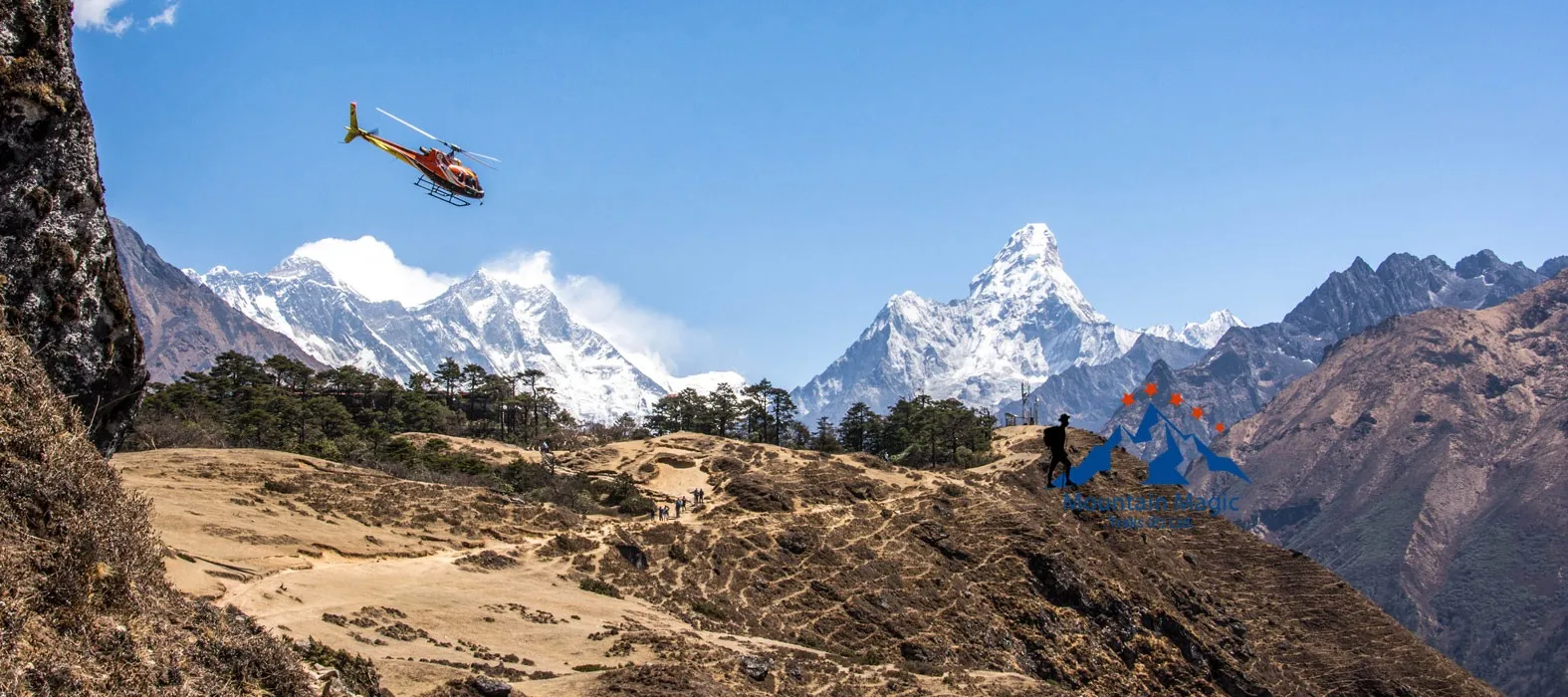
The helicopter return is one of the defining features of the Everest Base Camp Trek With Helicopter Return.
It can save travelers several days of walking back through the same region.
But convenience should not mean ignoring the environmental side of mountain travel.
Helicopter flights use fuel and create noise in an otherwise quiet landscape. That does not automatically make the trip irresponsible, but it is worth recognizing that every form of transportation has an impact.
This is another reason to choose the trip because it genuinely fits your needs rather than treating the helicopter as a novelty.
Do Not Chase the Perfect Photograph
The Everest region is extremely photogenic.
That can create another problem.
People sometimes step into unsafe areas, block trails, disturb others, or ignore local rules just to get a photograph.
Do not do that.
A picture is never worth putting yourself, another trekker, or the environment at risk.
The best photographs often come from simply stopping in a safe place and paying attention.
Respect the Quiet
The mountains do not need loud music.
You do not need to play videos through your phone speaker while walking. You do not need to shout across a valley.
There is something valuable about hearing the natural sounds around you.
River water.
Wind.
Birds.
Footsteps.
Prayer flags moving in the air.
The Everest Base Camp Trek With Helicopter Return can be a rare chance to spend time away from constant city noise. Give yourself permission to enjoy that silence.
Responsible Travel Makes the Experience Better
Being careful does not make an Everest trek less exciting.
It can actually make it more meaningful.
When you understand that the villages are real homes, the trails are shared spaces, the mountains are fragile environments, and the people around you are not part of the scenery, you experience the region differently.
You stop being only a tourist.
You become a visitor who understands that the place matters.
FAQs
How can I reduce waste during the trek?
Carry reusable items when practical, avoid unnecessary packaging, and keep all personal waste with you until you reach a suitable disposal point.
Should I ask before photographing local people?
Yes. A quick request shows respect and gives the person a choice.
Is it important to support local businesses?
Yes. Eating, shopping, and staying with local businesses can help tourism income reach mountain communities.
How should I behave at monasteries?
Follow local instructions, avoid disruptive behavior, and ask your guide if you are unsure about photography or other customs.
Does responsible travel apply to the helicopter return?
Yes. Responsible travel includes every part of the journey, including transportation. Travelers should understand that helicopter operations have environmental and operational impacts.
Conclusion
The Everest Base Camp Trek With Helicopter Return takes you into one of the world’s most famous mountain regions.
That privilege comes with responsibility.
Carry your waste. Respect local people. Protect religious sites. Treat porters fairly. Support local businesses. Avoid disturbing wildlife and the natural landscape. And remember that the mountains are not simply a backdrop for your holiday.
You are visiting a living community and a fragile environment.
If every trekker leaves with that attitude, the Everest region can remain a remarkable place not only for today’s travelers, but for the people and generations who will experience it tomorrow.
