
Getting a player to try a game is only half the challenge. The harder problem, and the one that determines whether a game actually succeeds long-term, is getting that same player to come back tomorrow, next week, and next month. Retention rarely fails because of one dramatic flaw. It usually erodes quietly, through small frustrations, unclear progress, and moments where a player simply forgets why they cared in the first place.
Why Retention Is Harder Than Acquisition
Getting Someone to Try a Game Is a Single Decision
A player deciding to try a game only has to clear one hurdle, curiosity strong enough to click play once. Retention requires clearing that same hurdle repeatedly, session after session, which means small annoyances that a player might overlook once become much more costly when they accumulate over time.
Players Don’t Announce Why They Leave
Unlike a direct complaint, most players who stop playing simply disappear without explanation. This makes retention problems harder to diagnose than acquisition problems, since there’s rarely a clear signal pointing to exactly what caused someone to quietly drift away.
Common Reasons Players Stop Coming Back
Progress That Feels Slow or Unclear
Players need to sense that their time is producing meaningful movement toward something. When progression feels vague, excessively slow, or disconnected from what a player actually cares about, the motivation to return the next day weakens considerably.
Repetition Without Enough Variation
Even a genuinely fun core loop can wear thin if a game doesn’t introduce enough variation over time. Players who feel like they’ve already seen everything a game has to offer after a few sessions have little reason to keep returning.
Friction That Accumulates Session After Session
Small annoyances, slow load times, unclear menus, unnecessary extra steps, might not drive someone away on a single visit, but they compound across repeated sessions. What feels like a minor inconvenience once becomes a real reason to quit after the tenth time.
What Actually Keeps Players Coming Back
A Clear Reason to Return Tomorrow
Strong retention often comes from giving players a specific, understandable reason to come back, whether that’s a daily goal, an ongoing project, or simply curiosity about what happens next. Vague appeal isn’t enough, players need a concrete hook that makes returning feel worthwhile.
Visible, Meaningful Progress
Players stay engaged when they can clearly see that their time is adding up to something, whether that’s a growing collection, a stronger character, or visible improvement in skill. Progress that’s hidden or hard to perceive fails to reinforce the habit of returning.
Respect for the Player’s Time
Games that get players into meaningful content quickly, without excessive waiting or repetitive setup, tend to retain players far better than games that make every session feel like a chore to get through before the actual fun begins.
Designing Systems That Support Long-Term Retention
Build in Short-Term and Long-Term Goals Together
Relying only on long-term goals can make early sessions feel aimless, while relying only on short-term goals can make the game feel shallow over time. Layering both, small daily objectives alongside a longer overarching goal, gives players reasons to return in both the near and distant future.
Introduce New Content or Variation Regularly
Keeping a core loop fresh doesn’t necessarily require constant new features, sometimes small variations, new challenges, or seasonal changes are enough to prevent a game from feeling stale to players who have already spent significant time with it.
Reduce Friction Wherever Possible
Auditing a game for small sources of friction, unnecessary loading, confusing navigation, repetitive setup steps, and removing them wherever reasonable, tends to improve retention more than adding flashy new features on top of an experience that’s still frustrating to move through.
Testing and Improving Retention Over Time
Retention problems are often invisible from a design document and only become clear once real player behavior can be observed over multiple sessions.
Why Iteration Matters More for Retention Than Almost Anything Else
Because retention issues tend to be quiet and cumulative rather than dramatic, fixing them usually requires testing several small adjustments over time rather than making one large change and hoping it solves everything. Being able to test these adjustments quickly matters enormously for actually improving retention in practice.
A Platform That Supports This Kind of Iteration
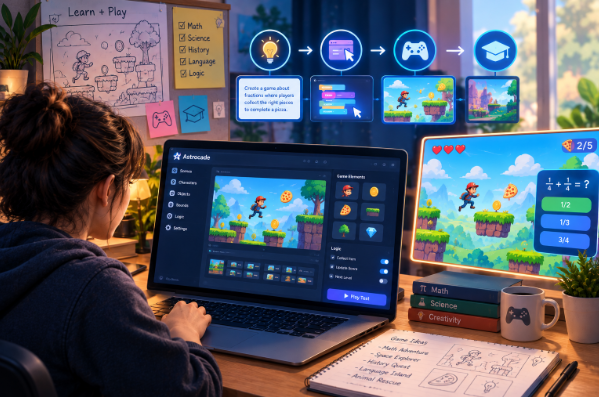
Astrocade makes it easier to create a game and adjust systems like progression pacing or session structure quickly, letting creators test different approaches to retention without needing to rebuild core systems each time something needs refining based on real player behavior.
Seeing Retention-Focused Design in a Real Game
Minecraft Corporate Tower is a good example of a game built around a clear, ongoing progression structure that gives players a specific reason to keep building and returning. Games structured around visible, cumulative progress like this tend to have a natural retention advantage, since players can easily see what they’re working toward each time they come back.
Common Mistakes That Hurt Retention
Front-Loading All the Best Content
Some games put their most exciting content right at the start, which can leave players feeling like everything afterward is a letdown by comparison. Pacing meaningful content and rewards throughout the experience tends to sustain engagement far better than concentrating it all upfront.
Making Progress Too Easy or Too Difficult Too Quickly
Progression that moves too fast can make a game feel shallow once everything is unlocked, while progression that moves too slowly can frustrate players before they’ve had a chance to feel invested. Finding the right pacing requires ongoing observation of how real players actually experience it.
Ignoring Where Players Actually Drop Off
Without paying attention to specific points where players tend to stop returning, it’s easy to guess wrong about what’s actually causing retention problems. Identifying the exact moments where drop-off happens gives far more useful information than general assumptions about what might be wrong.
A Practical Approach to Improving Retention
A reasonable process looks like this. Identify the specific points in a game’s early sessions where players tend to stop returning, rather than assuming retention issues based on general intuition. Test small adjustments to progression pacing, session structure, or friction points one at a time, so the effect of each change is clear. Make sure players always have both a short-term reason to return tomorrow and a longer-term goal to work toward, and keep introducing enough variation over time to prevent the experience from feeling repetitive.
Final Thoughts
Player retention rarely fails because of one obvious mistake, it erodes quietly through small frictions and unclear progress that accumulate over repeated sessions. Improving it takes careful attention to where players actually drop off, respect for their time, and a willingness to keep testing small adjustments rather than assuming one big change will fix everything.
