
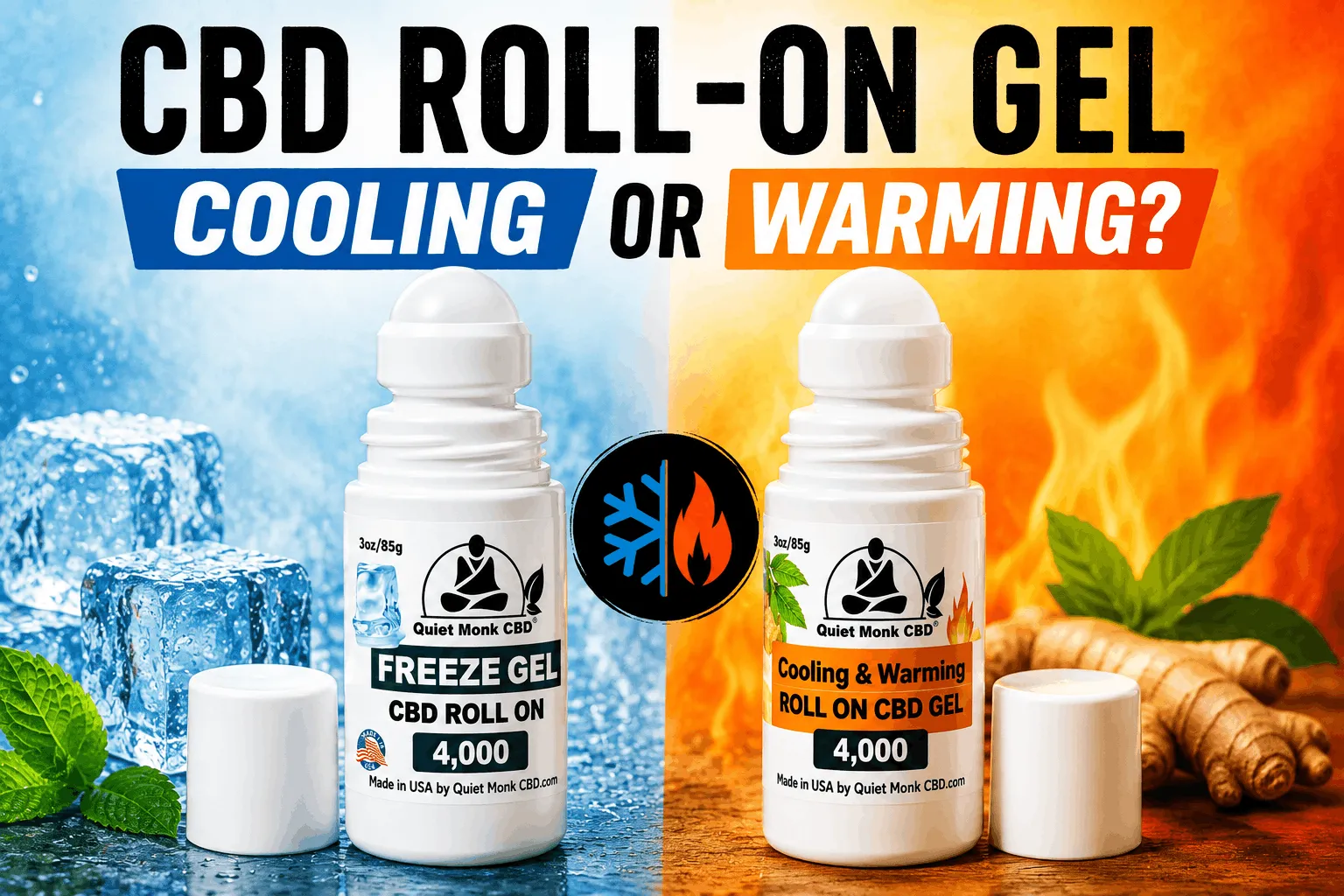
Roll-on topicals have become popular among people who want a convenient way to apply a product after exercise, commuting, long working days, or other physically demanding activities.
Their appeal is easy to understand. The roller applicator lets a person spread a product over a targeted area without scooping cream from a jar or rubbing the formula onto the skin with their fingers.
However, not every roll-on contains the same ingredients or provides the same experience.
Decide What Sensation You Prefer
One of the biggest differences between roll-ons is whether they create a cooling, warming, or neutral sensation.
Cooling products frequently contain menthol. The noticeable cold feeling produced by menthol can be a major part of the user’s experience.
Warming formulas use different ingredient combinations to create a contrasting sensation.
Neither is automatically the better choice. Some people enjoy cooling products after activity, while others find warming formulations more comfortable.
Compare More Than the Front Label
Anyone researching how to choose a roll on should begin with the complete label rather than the biggest marketing claims on the package.
Check the amount of CBD, container size, additional active or botanical ingredients, directions for use, and any warnings supplied by the manufacturer.
If a CBD roll-on is being considered, third-party laboratory testing is another useful factor. A current laboratory report can help consumers understand the cannabinoid content associated with a particular product or batch.
Think About Where You Will Use It
Packaging affects convenience.
A compact roll-on may fit easily into a gym bag or backpack, making it practical for people who spend much of their day away from home.
Rollers also provide relatively controlled application because the product is placed directly on the chosen area.
For larger parts of the body, however, some people may find creams easier to spread. This is why choosing a format based on real use is more practical than assuming one product style suits every situation.
Review the Ingredients Carefully
CBD is only one part of a topical product.
Menthol, botanical extracts, carrier ingredients, fragrances, and moisturising components can influence the skin feel significantly.
People with allergies or sensitive skin should read the ingredient list carefully before applying a new formula.
A small test application can also be sensible when trying a topical product for the first time.
Never assume that a product described as natural is automatically suitable for every skin type.
Keep Expectations Realistic
CBD products are often discussed in connection with soreness and discomfort, but consumers should separate personal wellness use from proven medical treatment.
A roll-on may be convenient to apply, but convenience does not establish that the product can diagnose or treat an underlying injury or health condition.
Anyone experiencing severe, unexplained, or persistent pain should seek medical advice rather than depending solely on a topical product.
This is particularly important when discomfort follows an injury or is accompanied by swelling, weakness, numbness, or other concerning symptoms.
Use the Product as Directed
More is not necessarily better.
Following the manufacturer’s application instructions helps reduce unnecessary product use and gives consumers a clearer idea of how the formula performs.
Hands should still be washed when necessary, especially before touching the eyes or face after handling products containing menthol or similar ingredients.
The roll-on should also be stored according to the directions on its packaging.
Conclusion
A good roll-on choice depends on more than CBD strength. The applicator, texture, cooling or warming ingredients, container size, laboratory information, and personal skin preferences all contribute to the experience.
For active adults, portability and clean application can make roll-ons particularly convenient. Comparing the full formulation and using realistic expectations, however, is far more useful than selecting a topical based only on bold marketing claims or the largest milligram number.
